What a 'Coded' SFP Module Is, and Why Switches Accept It
An explanation of how EEPROM coding on SFP/SFP+ modules works, why Cisco, Huawei and H3C switches see them as supported modules, and the limits worth knowing about
Updated 2026-09-06
How it works
Every SFP/SFP+ module carries a small memory (EEPROM) holding the data defined by the SFF-8472 standard: vendor name, part number, wavelength, distance and the diagnostic monitoring (DDM) readings. When the module is plugged into a switch, the operating system reads that data and decides whether to bring the port up.
Some switch vendors, Cisco among them, check whether the vendor name appears on their list of supported modules. If it does not match, the switch shuts the port down and logs %GBIC_SECURITY. Coding means setting the EEPROM data to what that vendor's switch expects, so the port works immediately without any configuration change.
What does not change
- Optical signal quality: set by the laser and the receiver, nothing to do with the code
- Supported distance: set by the module's optical spec (SR 300 m, LR 10 km, ER 40 km)
- DDM readings: read normally through
show interface transceiver(Cisco) ordisplay transceiver(Huawei/H3C)
What to specify when ordering
- Switch brand and model — for example Huawei S5720-28X-SI or Cisco C9200L
- Fiber type and distance — multimode (SR) or single-mode (LR/ER)
- Number of ports needed — modules are used in pairs (one at each end)
If you are unsure, send us the device model on LINE and we will check it and advise you for free, or use the find parts by device model tool
Checking after installation
Cisco:  show interface transceiver detail
Huawei: display transceiver interface XGigabitEthernet0/0/1 verbose
H3C:    display transceiver interface Ten-GigabitEthernet1/0/49
The Tx/Rx Power values should fall within the range given in the spec. If Rx reads abnormally low, check the fiber patch cord and clean the connectors first.
Frequently asked questions
- How does a coded module differ from a genuine one?
- The optical parts (the laser and the receiver) are built to the same MSA standard. What differs is the data in the EEPROM, which states the vendor name and the part number. Coding means setting that data to match what the switch expects.
- Do I have to enter the service unsupported-transceiver command?
- If the module is correctly coded as Cisco, no: the switch accepts the module normally. That command is only needed when you use a module that has not been coded.
- Will the module stop working after a switch firmware update?
- Generally not, because the switch checks the EEPROM data, and that does not change with firmware. If there is a problem, we replace the unit under warranty.
Products
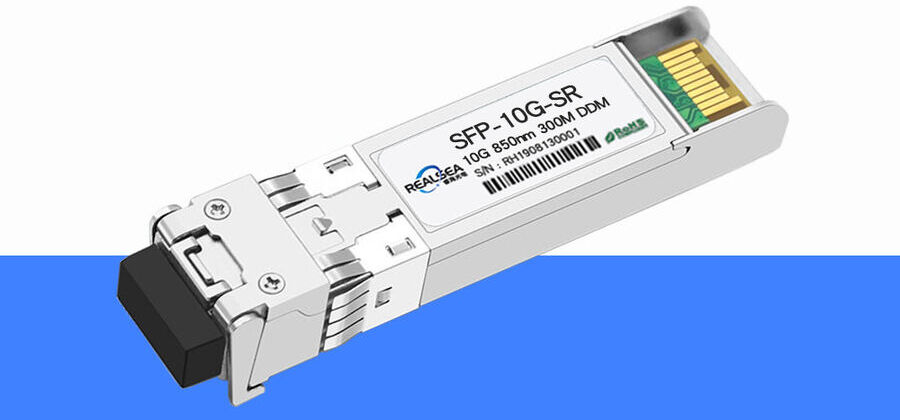
โมดูล SFP+ 10G SR 850nm 300m
SKU: PF-SFP10G-SR · OEM equivalent: SFP-10G-SR, OMXD30000, SFP-XG-SX-MM850-A, J9150D, EX-SFP-10GE-SR
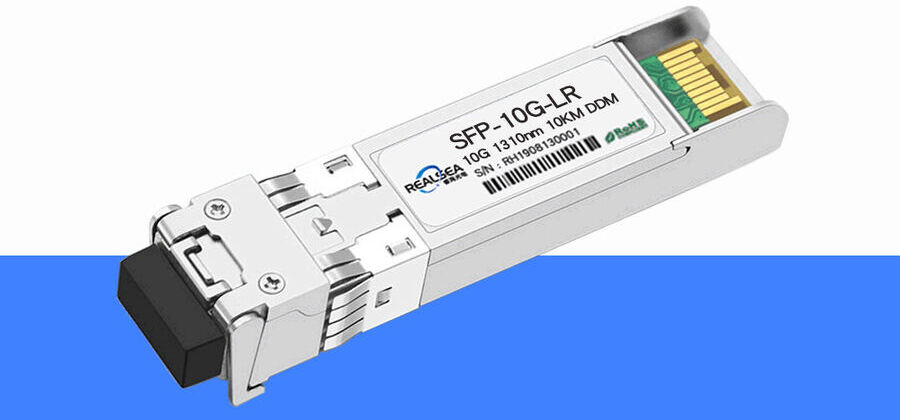
โมดูล SFP+ 10G LR 1310nm 10km
SKU: PF-SFP10G-LR · OEM equivalent: SFP-10G-LR, OSX010000, SFP-XG-LX-SM1310, J9151E, EX-SFP-10GE-LR
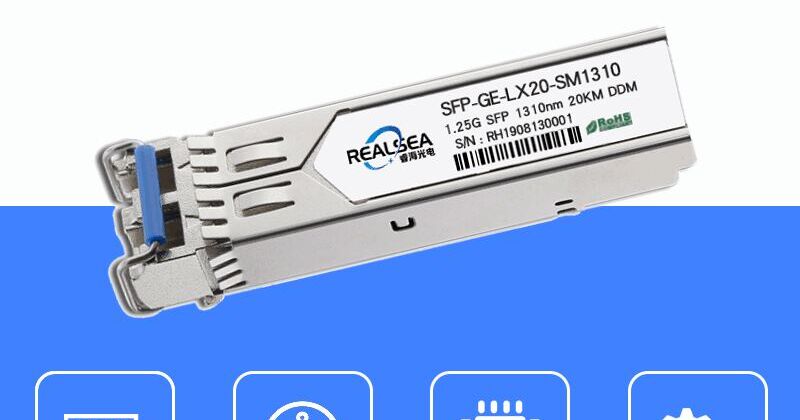
โมดูล SFP 1G LX 1310nm 10km
SKU: PF-SFP1G-LX · OEM equivalent: GLC-LH-SMD, SFP-GE-LX-SM1310, SFP-GE-LX-SM1310-A, J4859D, EX-SFP-1GE-LX